

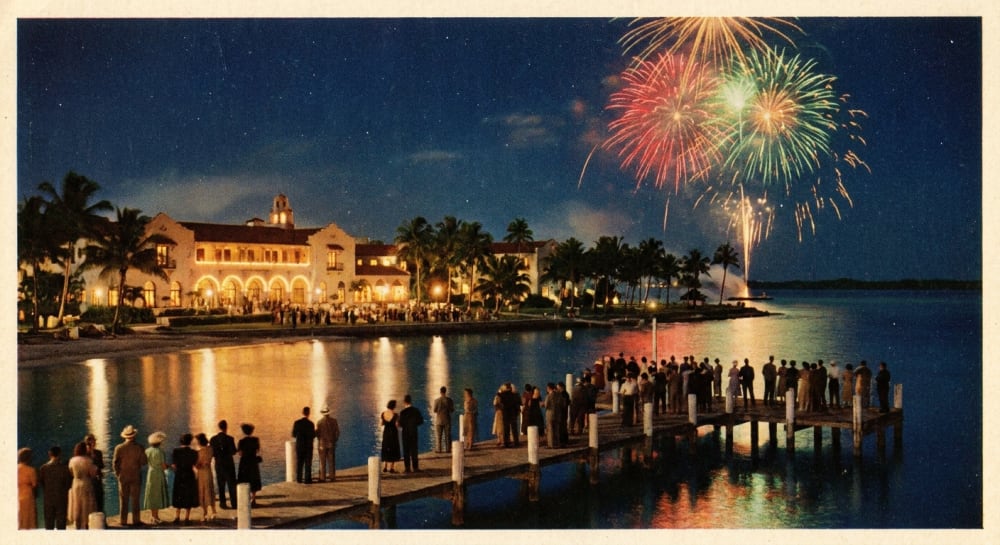
For residents and visitors of Indian River County, few local establishments hold as much cultural prestige and enduring appeal as Earl’s Hideaway in Sebastian. Yet, long before it became the beloved waterfront destination it is today, its origins were deeply intertwined with the glamorous and storied history of the Sebastian Inn.
The historic Sebastian Inn, originally a 1920s luxury hotel on the Indian River Lagoon, served as the birthplace of the original Earl’s Bar before transitioning through an era of military occupation, post-war tourism, and eventually making way for the modern landscape of Sebastian’s waterfront.
The grand narrative begins in the roaring twenties. Constructed during the 1925 Florida real estate boom, the 40-room Spanish-Mediterranean hotel was built for $750,000 by Fort Pierce developer F.E. Gober and Georgia engineer James Odom. Initially known as the Edgewater Park Hotel, it officially opened its doors in early 1926. To avoid confusion with the older 1912 Sebastian Hotel on Main Street, it was eventually dubbed the New Sebastian Inn. Today, the property’s original footprint is occupied by the Sportsman’s Lodge & Marina at 412 Indian River Drive.
Throughout the 1930s, the property saw massive investments. In 1939, under the ownership of George W. Scholtz, the inn underwent an extensive $35,000 renovation. Scholtz transformed the location into a premier Treasure Coast destination by introducing a flurry of luxurious amenities:
- Constructing an 850-foot-long dock complete with a T-shaped fishing pier and a striking archway entrance.
- Adding a sprawling 680-foot concrete bulkhead to expand the waterfront footprint by 150 feet.
- Bringing modern technology to Sebastian, including a teletype machine and donating land for the town’s first telephone exchange building.
- Hosting spectacular nightly fireworks displays at 9 p.m. and 10 p.m. that could be seen for twenty miles across the region.
The trajectory of the Sebastian Inn shifted dramatically during World War II. In 1944, Earl Roberts, who had relocated to Florida with his life partner Grace Martin, purchased the property. However, civilian operations were immediately halted when the U.S. Navy commandeered the hotel to serve as military barracks. The facility housed members of a naval radar team connected to the Night Fighter Training Program operating out of the Naval Air Station in Vero Beach, tasked with protecting the Florida coast from German vessels.
Following the war, the Navy vacated the premises, and Roberts finally took full control, officially opening Earl’s Bar & Package Store in 1946. Roberts and Martin created a vibrant atmosphere for locals and tourists alike. Guests enjoyed scenic excursions along the lagoon and to the Pelican Island National Wildlife Refuge aboard iconic tour boats like the Jungle Belle and the Leading Lady. During this post-war boom, Roberts even became deeply involved in local civic life, serving as the mayor-judge of the Sebastian City Council from 1948 to 1949 after winning a tightly contested tie-breaker election.
Despite its mid-century success and hosting esteemed groups—including a 1954 conservation meeting attended by renowned The Stuart News editor Ernie Lyons—the rise of affordable motels along the newly developed U.S. 1 corridor began to drain the inn’s business. Following financial difficulties, the property was foreclosed and auctioned at the Vero Beach courthouse in 1955 to a pair of local attorneys.
The physical hotel steadily declined over the next decade and was ultimately razed in 1968. However, the spirit of the establishment survived. Earl Roberts and Grace Martin relocated their beloved bar three-quarters of a mile north on Indian River Drive. That new location thrives today as the iconic Earl’s Hideaway, serving as a living monument to a fascinating chapter of Indian River County’s vibrant history.