

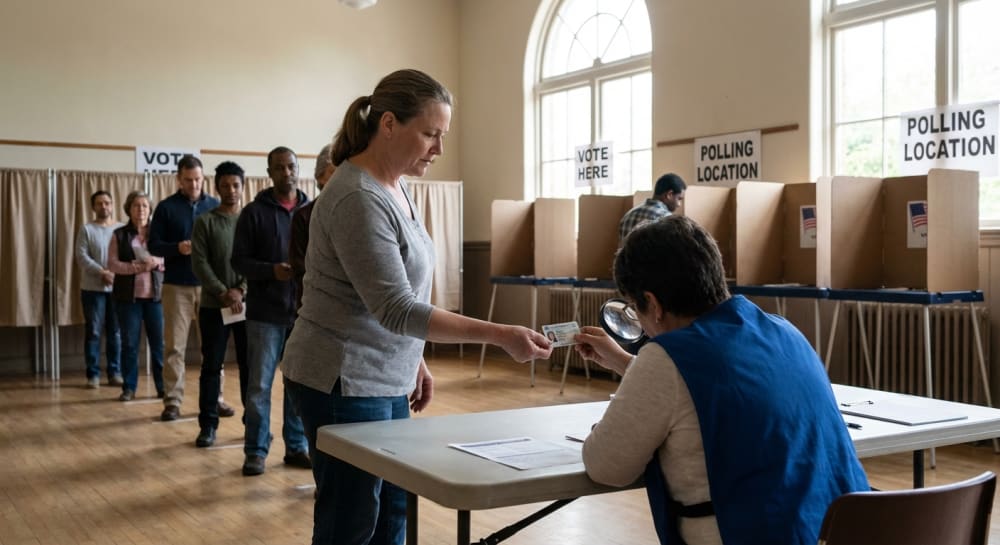
Florida residents, including those here on the Treasure Coast, will soon see significant changes to state voting and identification requirements. The Florida House and Senate recently passed a comprehensive elections bill, co-sponsored by Vero Beach Republican State Sen. Erin Grall, that introduces stringent new citizenship verification processes and alters the types of identification accepted at local polling places.
Governor Ron DeSantis has expressed strong support for the legislation and stated his enthusiastic readiness to sign it into law. While the core provisions aim to address what proponents describe as essential election integrity measures, the sweeping changes have also prompted debate over how they will impact everyday voters across the state, particularly college students, seniors, and women who have changed their names.
The new Florida elections legislation mandates citizenship verification by matching voter rolls with driver’s license databases and removes student and retirement center IDs from the list of acceptable voter identification. To prevent disruption during the upcoming midterm elections, key provisions will not take effect until January 1.
Stricter Citizenship Verification Requirements
The cornerstone of the new legislation is a rigorous citizenship verification system that will cross-reference the voter registration database from the Secretary of State’s office with records held by the Department of Highway Safety and Motor Vehicles. For the vast majority of Florida voters who hold a REAL ID-compliant driver’s license, this background check will likely be an invisible process. However, residents without a REAL ID, or those who have never had a state-issued driver’s license, will face new administrative steps before they can cast a ballot.
Estimates indicate that hundreds of thousands of Floridians—and potentially over a million—do not possess REAL ID-compliant identification. Under the new law, these voters may be required to prove their citizenship by providing a birth certificate, passport, or naturalization paperwork. Notably, voters who change their names, such as through marriage or divorce, or those who alter their party affiliations may also trigger a review requiring additional documentation. Furthermore, beginning next year, newly issued driver’s licenses and state ID cards will feature a specific marking to expressly indicate U.S. citizenship.
Changes to Accepted Voter Identification
In addition to backend citizenship checks, the types of identification accepted physically at polling places are being reduced. Under the new guidelines, poll workers will no longer accept the following as valid voter ID:
- Student identification cards
- Retirement center identifications
The state will continue to accept standard driver’s licenses and several other forms of identification, including military identification and concealed weapons permits. Governor DeSantis referred to the previous acceptance of student IDs for voting as a loophole that the new legislation successfully closes.
New Disclosure Rules for Candidates
Beyond the voting booth, the legislation introduces transparency requirements for those seeking public office:
- Candidates for any elected office must publicly disclose if they hold dual citizenship with another country.
- Anyone running for Congress must disclose if they intend to trade stocks while in office, or if they have done so during previous congressional terms.
What Did Not Make the Final Cut
While the legislation represents a substantial shift in Florida’s election laws, several highly discussed measures were excluded from the final version. Lawmakers opted not to eliminate the state’s popular vote-by-mail system, a method that has historically seen high utilization across Florida by voters of all demographics. The final bill also removed provisions that would have scrapped recounts in close elections and blocked counties from using early voting systems designed to shorten wait times, such as the ExpressVote system used in Palm Beach County.
Implementation Timeline
Anticipating potential logistical challenges for local supervisors of elections, lawmakers postponed the effective date of the most complex requirements. Rather than taking effect this summer ahead of the August primaries and November general elections, the key provisions of the law will officially go into effect on January 1, following the conclusion of this year’s midterm election cycle. Even with the delayed implementation, prominent legal challenges to the new rules are widely expected.