
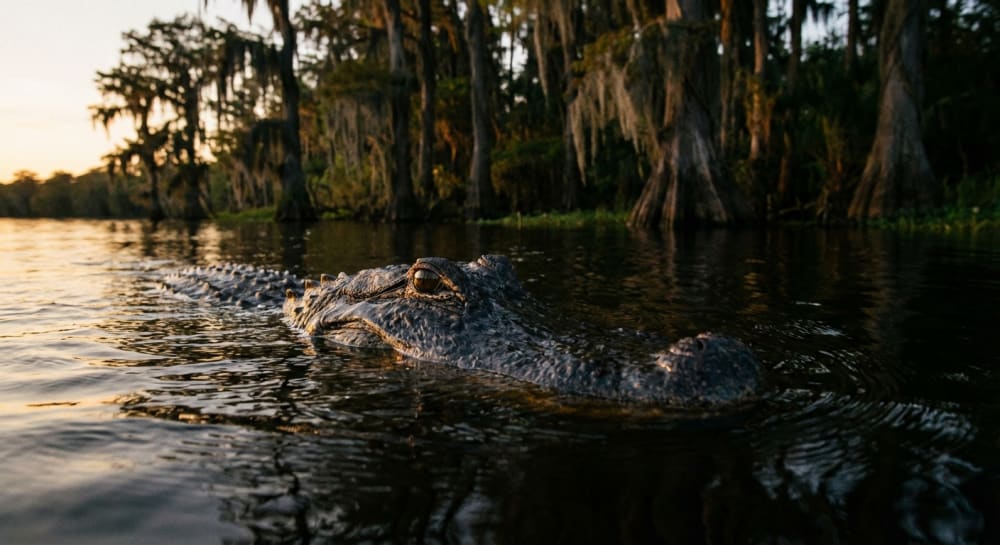
For residents of Vero Beach and Indian River County, the presence of wildlife is a daily part of life in the Sunshine State. However, a recent report has highlighted that Florida’s longest river—which originates right here in our backyard—now holds the title for the most alligator-infested river in the state.
According to a ranking by A-Z Animals, the St. Johns River tops the list for alligator population density. While the river winds north for hundreds of miles, its journey begins at Blue Cypress Lake, located approximately 30 miles west of Vero Beach in Indian River County.
The St. Johns River is reportedly home to 5,109 alligators, distinguishing it as the most alligator-infested river in Florida according to recent data.
The Local Connection to a State Record
The St. Johns River is a massive hydrological feature flowing 310 miles north to the Atlantic Ocean near Jacksonville. However, its headwaters at Blue Cypress Lake are a staple of the local Indian River County environment. Biologists routinely survey Florida’s lakes, rivers, and marshes to track these populations, a process that helps state officials manage wildlife and determine hunting quotas for the season.
Following the St. Johns River, the report identified the top five rivers in Florida with the highest alligator populations:
Staying Safe in Indian River County Waters
With the headwaters of such a densely populated river located in western Indian River County, the Florida Fish and Wildlife Conservation Commission (FWC) urges residents and visitors to remain vigilant when recreating near the water. Whether you are boating at Blue Cypress Lake or exploring nearby marshes, safety is paramount.
The FWC recommends the following precautionary measures:
For those concerned about a specific alligator that may pose a threat to people or property, the FWC operates a toll-free Nuisance Alligator Hotline at 866-392-4286.