
Florida Wildlife Officials Issue Critical Alert for Sebastian Inlet and Treasure Coast Beachgoers
As the spring season arrives in Indian River County, local beaches are becoming a nursery for Florida’s native wildlife. The Florida Fish and Wildlife Conservation Commission (FWC) has issued an urgent plea to residents and visitors along the Treasure Coast to exercise extreme caution to protect vulnerable nesting shorebirds, seabirds, and wading birds.
While many residents flock to the sands of Sebastian and Vero Beach for recreation, these coastal areas serve a dual purpose as critical habitats. According to state officials, nesting season is already underway in parts of the state, with specific activity ramping up near the Sebastian Inlet in March and April.
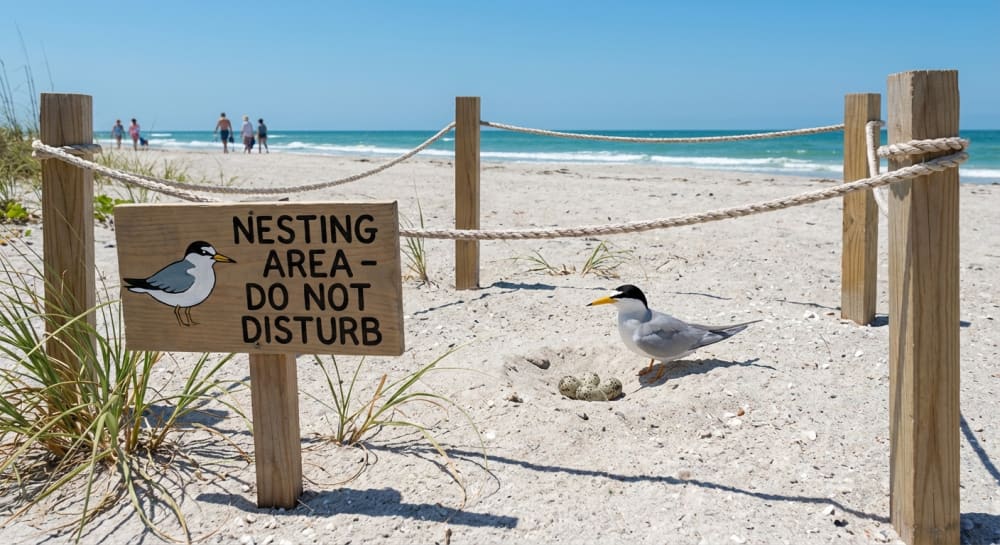
The FWC emphasizes that the survival of these species often depends on human behavior. unlike birds that nest high in trees, many shorebirds and seabirds create their nests directly on the sand. These “sandy scrapes” are shallow depressions where eggs are laid. Because the eggs and hatchlings are naturally camouflaged to blend in with the beach environment, they are incredibly difficult to see and easily crushed by unaware pedestrians or vehicles.
Anyone enjoying time near the shore can play a big part in their conservation.
To ensure that Indian River County remains a sanctuary for this wildlife, the FWC has outlined specific guidelines for beachgoers. Disturbing these birds can cause adults to flush (fly away) from their nests, leaving eggs and chicks exposed to the harsh sun, weather elements, and predators.
Residents and tourists are advised to follow these protective measures:
- Respect Critical Wildlife Areas (CWAs): Before heading to the coast, check for any established CWA closures. These areas are designated to safeguard high concentrations of nesting birds. If you see posted signs, remain outside the perimeter and keep noise levels low to avoid stressing the animals.
- Maintain a Safe Distance: Give nesting birds space. The recommended distance is at least 300 feet. If birds seem agitated or take flight, you are too close.
- Pet Safety: It is best to leave pets at home when visiting bird-nesting beaches. If you are on a dog-friendly stretch of the coast, keep your pet on a leash and far away from wildlife. Even well-trained dogs can frighten birds into abandoning their nests.
- Clean Up Thoroughly: Secure all trash and remove fishing lines. Food scraps attract predators like raccoons and crows that feed on eggs, while discarded monofilament line can entrap and kill birds. Utilize recycling stations for fishing line whenever possible.
While wading birds such as herons typically breed in offshore mangrove colonies, the immediate shoreline remains the primary danger zone for many other species. As the season progresses through spring and into summer, vigilance at the Sebastian Inlet and surrounding beaches will be essential to ensure the next generation of Florida’s shorebirds survives.