

Residents of Indian River Shores are banding together to address a looming financial burden brought on by new state environmental regulations. More than 70 homeowners have presented a formal petition to both the Indian River Shores Town Council and the Vero Beach City Council. Their primary goal is to secure local municipal support and financial assistance to help offset the staggering costs associated with connecting their homes to the Vero Beach municipal sewer system.
The sweeping infrastructure changes stem from the Florida Legislature’s passage of House Bill 1379 in 2023. This statewide legislation mandates that property owners utilizing standard septic systems must either upgrade to advanced nitrogen-reducing septic technologies or connect to a central sewer system by the year 2030. While the environmental benefits of the mandate to protect local waterways are widely acknowledged by the community, the immediate financial realities for barrier island residents are proving to be intensely challenging.
According to the petition’s organizers, Stephen Shorrock and Sheila Saville, the designated conversion plan for their coastal neighborhoods leaves them with only one option: connecting to the municipal sewer system that services the neighboring town of Vero Beach. The estimated cost for this specific connection is causing widespread alarm, with projections reaching up to $40,000 per household, and potentially higher.
The Florida government decided that this was the right thing to do, which is fine with us. We support connecting to the sewer. What it really comes down to is how do we fund this? Why wasn’t there more thought given to the proper way to fund this?
The affected Indian River Shores neighborhoods include properties east of Highway A1A on Surf Lane, Pebble Lane, and Reef Lane, as well as homes west of A1A on Seminole Lane and Indian Lane near the town’s southern border. Additional properties on Beachcomber Lane and Sunrise Terrace are also included in the mandated conversion zone.
Many of these local homes were originally constructed in the 1960s and 1970s, long before central sewer infrastructure was available in the town. While property values across the Treasure Coast have soared over the past few years, organizers stress that many of the homeowners in these enclaves are retirees or individuals who inherited their properties. As a result, they may not have the liquid assets or income required to easily absorb such a massive, unexpected out-of-pocket expense.
To alleviate this financial shock, the residents’ petition outlines several key requests for local decision-makers:
- Actively pursue state and federal grant funding to subsidize the local infrastructure costs.
- Postpone any homeowner assessments until all alternative funding avenues have been completely exhausted.
- Implement a 10-year, interest-free payment plan for residents to manage the final connection fees over time.
- Offer municipal conversion credits comparable to the $3,390 credit currently provided by the City of Vero Beach for Septic Tank Effluent Pump (STEP) system conversions.
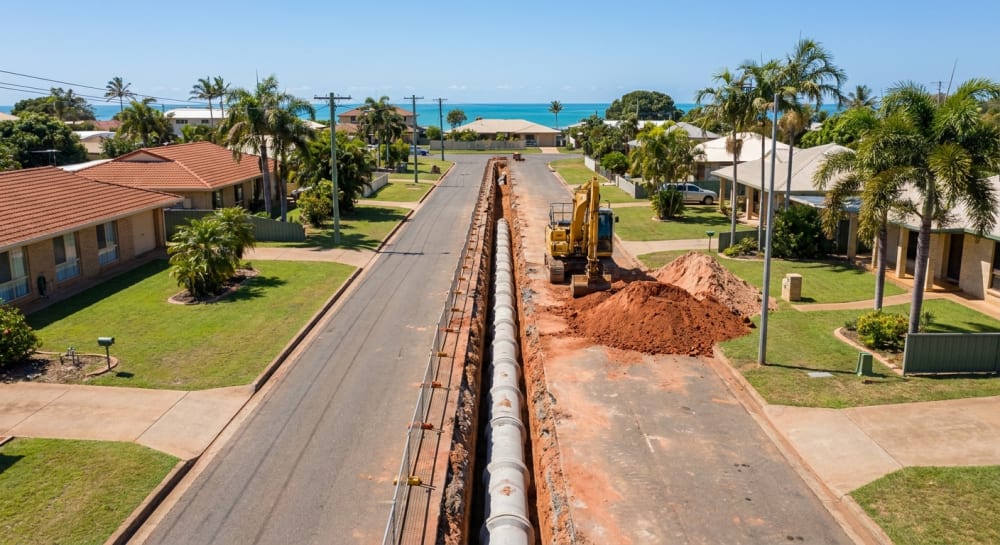
A significant point of contention for the neighborhood revolves around the specific type of sewer system being installed. Residents believe they are being steered toward a highly expensive gravity-fed system—rather than the significantly cheaper STEP system used in other parts of the island—because the town is concurrently undertaking street repaving projects on Pebble Lane and Beachcomber Lane. While a STEP conversion typically costs around $17,000 per household because the connective lines are smaller and can be installed without major street excavation, the current municipal plan combines the repaving and gravity-sewer projects. This overlap is inadvertently passing higher shared construction and excavation costs directly onto the homeowners.
Advocates point out that other Florida communities have successfully navigated these state mandates without financially devastating their residents. For example, neighboring Brevard County implemented the Save Our Indian River Lagoon Project Plan, funded by a half-cent sales tax. Under this initiative, qualifying residents can receive grants of up to $24,000 per property to cover septic-to-sewer conversions.
Local officials, including Indian River Shores Town Council members James Altieri and Bob Auwaerter, Town Manager Jim Harpring, and Vero Beach Water and Sewer Director Rob Bolton, have already met with affected residents to discuss the shared-cost formulas. While the initial dialogue has been reportedly receptive, homeowners remain vigilant. Both municipalities are currently immersed in drafting their budgets for the upcoming year, meaning official solutions or compromises are not expected to be addressed publicly until at least August. Until then, Indian River Shores residents are determined to keep the pressure on to ensure a fair, transparent, and affordable path forward for the community.