

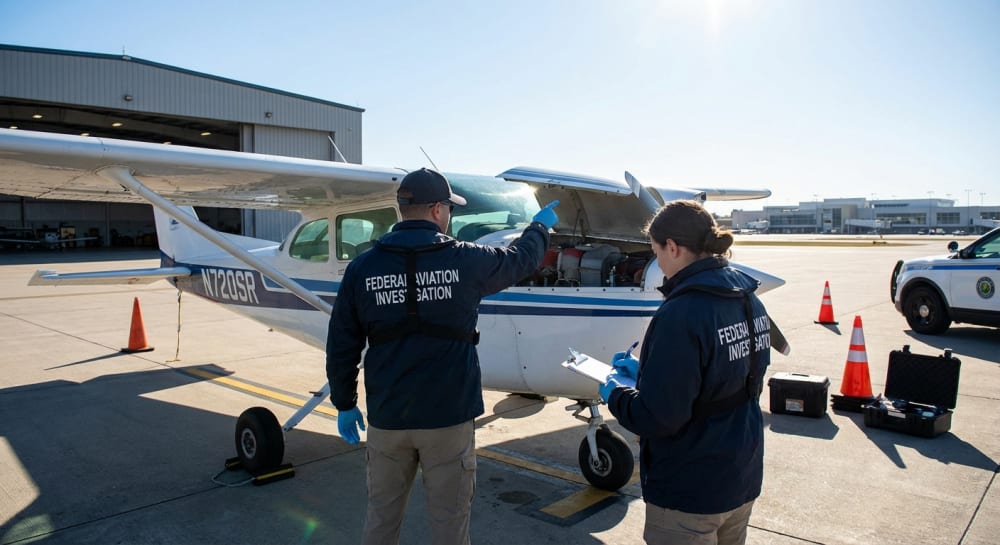
The National Transportation Safety Board (NTSB) has officially concluded its investigation into a tragic aviation accident that impacted the Treasure Coast community. According to recently released findings, the NTSB has determined the probable cause of the fatal small plane crash that occurred on March 30, 2024, in Fort Pierce.
The devastating incident claimed the life of a 22-year-old flight instructor and left a 19-year-old student pilot with serious injuries. Both individuals were affiliated with Aviator College, a regional flight training facility operating out of the Treasure Coast International Airport.
Based on the official NTSB report, the primary cause of the crash was determined to be the flight instructor’s failure to maintain control of the aircraft following a sudden, partial loss of engine power. However, federal investigators also pointed to a significant mechanical oversight that precipitated the emergency.
The NTSB report stated that a contributing factor to the fatal crash was a worn and loose throttle component. A mechanic had failed to check this critical component during an inspection conducted just one day before the accident.
The incident occurred directly on airport property while the pair was engaged in a flight training exercise. In response to the investigation’s findings and the tragic loss of life, immediate operational changes were made at the facility.
Key takeaways from the incident and subsequent report include:
- The failure to maintain aircraft control after partial engine power loss was the primary cause of the crash.
- A missed inspection of a worn throttle component the day prior was cited as a major contributing factor.
- Following the accident, Aviator College proactively implemented a rigorous new safety inspection program to enhance maintenance checks and protect its students and instructors.
This NTSB determination brings crucial answers to the Fort Pierce and wider Treasure Coast aviation community, underscoring the absolute necessity of strict maintenance protocols and comprehensive pre-flight inspections in local flight training programs.