

The approaching 250th anniversary of the United States offers a unique opportunity to reflect on the dramatic transformation of Florida’s Treasure Coast. What was once a sparsely populated, rugged coastline during the signing of the Declaration of Independence is now a thriving region on the precipice of a major population boom. From the historical origins of the 1715 Spanish fleet shipwrecks to the modern-day challenges of urban development, the immediate Indian River County area and the wider Treasure Coast are bracing for a future that balances rapid growth with essential environmental preservation.
A century ago, the Treasure Coast was home to roughly 10,000 pioneers. Today, the population sits near 690,000, and demographic forecasts predict staggering growth over the next five decades. According to the Florida Department of Transportation’s projections for 2070, the tri-county area is expected to eclipse one million residents. The forecasted breakdown paints a vivid picture of the region’s future:
- Indian River County: Projected to reach 255,200 residents, a significant increase from its current population of approximately 172,799.
- St. Lucie County: Anticipated to soar to 546,800 residents, up from just over 402,000 today.
- Martin County: Expected to grow to 234,800 residents, rising from its current 166,272.
As the region barrels toward this milestone, local leaders and young adults are voicing both optimism and concern regarding the inevitable changes. In Vero Beach, maintaining the community’s distinct cultural identity remains a top priority. City Council member Taylor Dingle notes that ongoing development, particularly westward expansion south of State Road 60 and west of Interstate 95, could eventually necessitate a second major retail hub—similar to the Indian River Mall corridor. Despite this looming expansion, the overarching goal among civic leaders is to preserve the quintessential small-town atmosphere characterized by familiar faces, accessible beaches, and vibrant downtown areas like the proposed Three Corners entertainment district.
This sentiment is strongly echoed by the region’s younger generation. Tori Malone, a student leader at Vero Beach High School, emphasizes the irreplaceable charm of Indian River County’s coastal lifestyle, citing local farmers markets, sea turtle conservation, and community concerts as vital cultural touchstones to protect against over-commercialization.
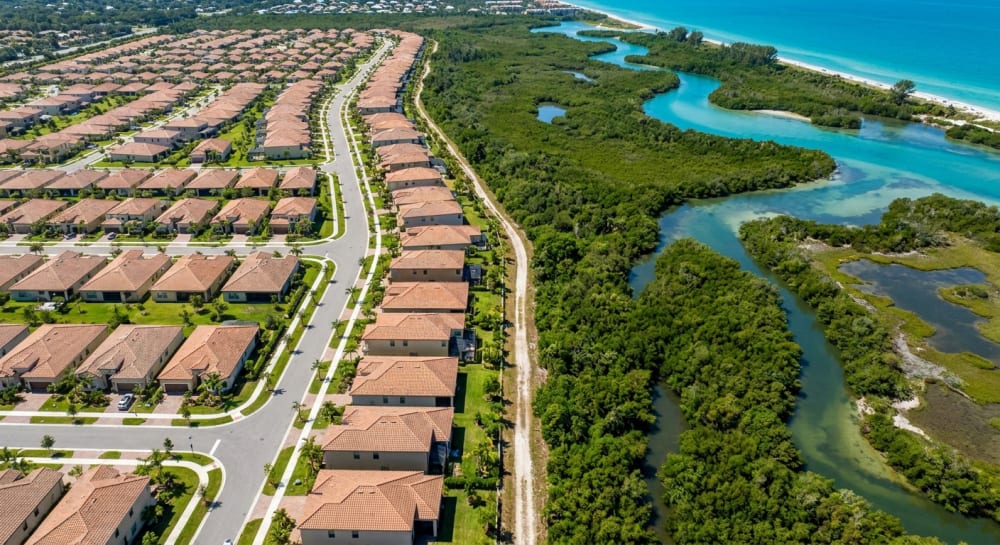
Further south, future leaders in St. Lucie and Martin counties are heavily focused on the environmental impact of suburban sprawl. High school valedictorians and recent college graduates alike point to the critical need for sustainable development. With the St. Lucie River and the Indian River Lagoon facing ongoing ecological pressures, the push for smart urbanism is gaining traction. For instance, the upcoming Newfield community in Palm City serves as a potential blueprint for future western development, aiming to build 4,200 homes while notably preserving 2,000 acres of natural habitat.
As the Treasure Coast prepares to celebrate America’s semiquincentennial, the region faces the complex task of accommodating a projected one million residents by 2070 while safeguarding the natural beauty, clean waterways, and tight-knit community charm that defined its past.
While technological advancements and new transportation methods may eventually alter the physical landscape of Vero Beach and its neighboring coastal cities, historical records show that core local issues—such as lagoon health, manageable growth, and affordable housing—remain constants. The region’s ability to navigate its next 50 years will depend heavily on the continued civic engagement of its residents, honoring the foundational ideals of community stewardship and forward-thinking urban planning.