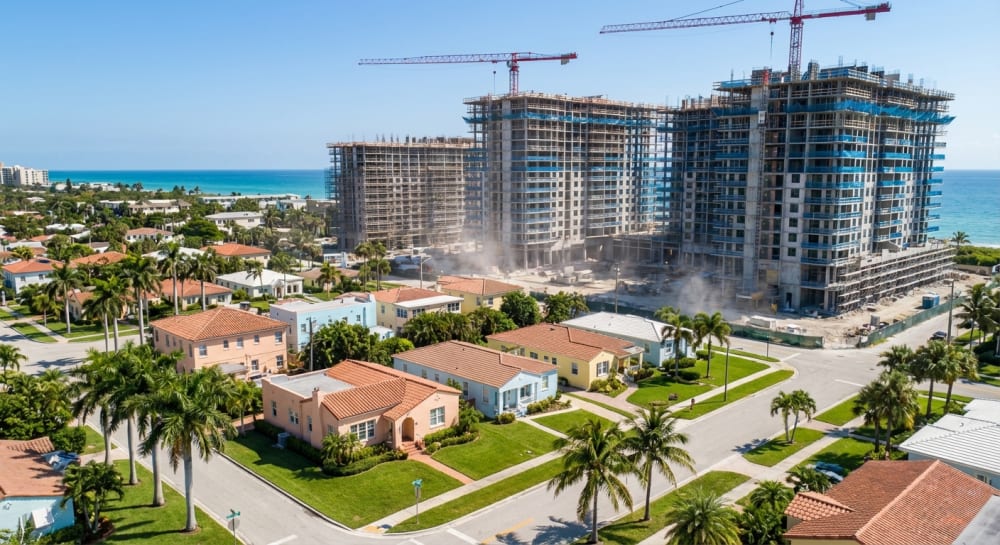

The debate over rapid development and population growth has taken center stage in Indian River County, specifically within the City of Sebastian. During a recent City Council meeting, Mayor Fred Jones led a critical discussion regarding the balance between controlling local expansion and adhering to restrictive state laws.
The conversation was sparked by a specific proposal involving the Chesser’s Gap commercial site located along South Fleming Street. Property owners are currently seeking to redevelop 58 acres of the site, shifting its use from commercial to a residential townhouse subdivision. This proposal has brought underlying community tensions to the surface, with many residents expressing that the city is growing too quickly.
The “Wrecking Ball” of State Law
While local sentiment leans heavily toward slowing down development, city officials explained that their hands are often tied by Florida state statutes. Mayor Jones highlighted Senate Bill 180, a piece of legislation passed following catastrophic weather events like Hurricanes Ian and Nicole.
The law effectively preempts local governments from enforcing more stringent land-use regulations or enacting building moratoriums. City Attorney Jim Stokes provided a stark assessment of the situation:
“No municipality or county could make any changes to any land use laws that were deemed more restrictive.”
Stokes described the legislation as a “wrecking ball” to local control. Under this law, cities are prohibited from enacting moratoriums on building and are forced into reactive reviews of developer applications. Essentially, the city cannot proactively alter zoning ordinances to stop growth without a specific request from a property owner.
Strategies for Managed Growth
Despite these hurdles, the Council discussed the tools still at their disposal. Mayor Jones noted that the council retains discretion over individual rezoning bids. If a developer requests a zoning change—such as the move from commercial to residential at Chesser’s Gap—the council is not obligated to approve it. These decisions are handled on a case-by-case basis.
Councilman Ed Dodd argued that to legally control growth, the city must update its foundational documents. He suggested a rewrite of the city’s comprehensive plan and land development code. Dodd pointed to the 2023 annexation of the 2,044-acre Graves Brothers property as a successful model. That project was approved unanimously because it included binding agreements that secured benefits for the city.
Dodd emphasized the importance of securing written commitments from developers before granting approvals, particularly regarding promises of affordable or workforce housing. Mayor Jones agreed, noting that vague promises often fail to materialize once a project is greenlit.
Balancing Property Rights and Community Vision
The meeting also touched on the delicate balance between preserving the community’s character and respecting private property rights. Vice Mayor Bob McPartlan offered a cautionary comparison to the City of Palm Bay, noting that it was similar in size to Sebastian in the early 2000s but has since changed unrecognizable due to rapid expansion. However, McPartlan also reminded attendees that property owners have a right to build within existing zoning codes, calling it “the American way.”
Councilman Chris Nunn expressed appreciation for the high level of public engagement at recent planning and zoning meetings, encouraging residents to remain involved in the process.
While no formal votes were taken regarding the Chesser’s Gap proposal or new ordinances during this session, the Council agreed to review potential revisions to city codes. Mayor Jones framed the discussion as a call to action, urging the council to collectively find legal avenues to manage the growth that is reshaping the community.