

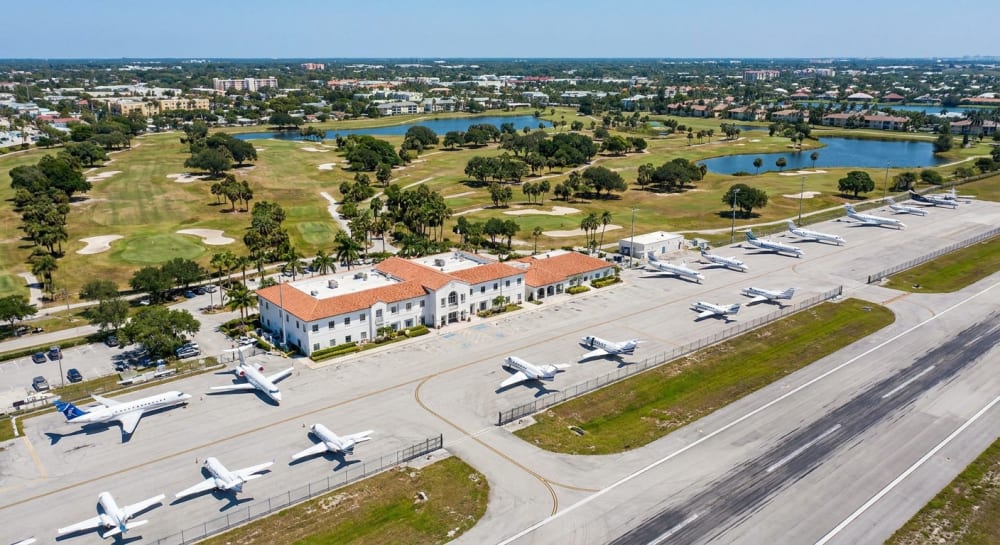
Vero Beach Regional Airport is at a critical crossroads, grappling with an unprecedented surge in commercial aviation demand over the past three years. As Indian River County experiences dramatic population and economic growth, local officials and residents are looking closely at how the nearly century-old facility should evolve. Complicating the debate is the future of the adjacent 340-acre former Dodger Pines Country Club, a massive tract of undeveloped land that could either become a dense residential subdivision or serve as a strategic mixed-use buffer for aviation and community development.
Recent months have seen a flurry of activity from major commercial carriers. Breeze Airways and American Airlines have successfully added new routes out of Vero Beach, while JetBlue recently cut its nonstop flights to New York’s JFK. To accommodate this fluctuating but intense commercial interest, the airport is undergoing several infrastructure adjustments:
- Construction of a new, dedicated rental car facility.
- Ongoing negotiations with a paid parking vendor to manage increased passenger vehicle traffic.
- Continuous, albeit minor, renovations to the existing passenger terminal.
However, these short-term solutions to passenger demand are consuming valuable open space on the airport’s footprint, leading to localized sprawl. The immediate push for more parking and rental car space has forced the airport to temporarily shelve its 2023 plans to build an electric vertical takeoff and landing port. Consequently, the Florida Department of Transportation is moving forward with a statewide network of these futuristic transport hubs that currently excludes Vero Beach.
With Indian River County officially designating aerospace and manufacturing as one of its four targeted economic sectors for future growth, the squeeze on available land is a pressing concern. Officials are eager to ensure legacy companies like Piper Aircraft and its network of regional suppliers have ample room to expand in the coming decades.
This need for aviation space has cast a spotlight directly across 43rd Avenue to the former Dodger Pines Country Club and Safari Pines mobile home park. Originally sold to developers in 2002 following the O’Malley family’s sale of the Los Angeles Dodgers, the property was eventually acquired by west coast Florida developer Sunfield Homes in 2015.
Sunfield has proposed a massive subdivision featuring 870 residential units, which includes 218 duplexes. The land sits largely on the south side of the airport’s runway protection zone, prompting serious concerns about the impact such dense development would have on local infrastructure—particularly the already congested intersection at 26th Street and U.S. 1, near the Cleveland Clinic Indian River Hospital.
Vero Beach officials are actively questioning the long-term public benefit of a traditional, sprawling subdivision in such an integral part of the city.
“This is a missed opportunity,” noted Jason Jeffries, Vero Beach’s planning and development director, emphasizing the stark contrast between a sprawling housing tract on one of the city’s largest remaining open spaces versus a development that better integrates with the area’s unique needs.
As the Vero Beach City Council prepares to host town hall meetings this fall to gather resident feedback on the 2024 airport master plan, alternative visions for the Dodger Pines property are naturally emerging. Rather than a standard housing development, community advocates and local planners are floating hybrid concepts that could benefit both developers and the public:
- Aviation Support: Utilizing the eastern edge of the property—near the old par-6 golf hole—for aerospace manufacturing, parts storage, or other aviation-related businesses.
- Nature and Recreation: Restoring the interior’s wooded areas and lakes, which were once teeming with otters and fox squirrels, into a nature-friendly village center or golf course to serve as a buffer between the runway and residential zones.
- Mixed Residential: Concentrating single- and multi-family homes further west, closer to the intersection of 58th Avenue and 26th Street.
With the fall public input sessions approaching, the community faces a defining moment. Deciding how to balance the realities of a growing regional airport with the potential of 340 acres of neighboring land will profoundly shape the economic, traffic, and infrastructural landscape of Vero Beach for decades to come.