

Despite a troubling statistic from the American Cancer Society indicating that liver cancer incidence rates have tripled in the United States over the last 40 years, medical advancements are offering new avenues of hope for patients on the Treasure Coast. Dr. Carlos Romero-Marrero, the division chief of gastroenterology and director of the Liver Center at Cleveland Clinic Martin Health, reports that a combination of cutting-edge transplant procedures, new chemotherapy combinations, and less invasive ablation techniques are significantly improving patient longevity.
Understanding the Disease
Dr. Romero explains that the most common form of the disease is hepatocellular carcinoma. This aggressive, fast-growing cancer accounts for approximately 90 percent of all primary liver cancers—meaning the cancer originates within the liver itself rather than spreading from another organ. It is most frequently found in individuals with advanced liver disease, such as cirrhosis.
Early Intervention and Ablation
For patients who receive an early diagnosis, less invasive therapies can be highly effective. Dr. Romero highlights ablation as a key treatment for early-stage disease. This procedure utilizes ultrasound technology to guide probes through the skin, destroying tumors using extreme heat or cold.
According to the Memorial Sloan Kettering Cancer Center, ablation is advantageous because it targets the tumor and a narrow margin of surrounding tissue, sparing healthy liver tissue. This precision reduces side effects and lowers the risk of recurrence. The procedure usually does not require a hospital stay and is recommended for patients with three or fewer tumors, each measuring under 3 centimeters.
Breakthroughs in Chemotherapy and Transplants
Since 2018, the medical community has seen a dramatic increase in the combinations of chemotherapy and immunotherapies available. One notable advancement is hepatic arterial infusion chemotherapy, which utilizes a pump in the abdomen to deliver drugs directly to the liver. When paired with traditional chemotherapy, this method has been shown to increase survival rates.
Dr. Romero also points to “machine perfusion” as a game-changer for liver transplants. Traditionally, donor livers were transported in cold storage, viable for only 10 to 12 hours. The new machine perfusion technique circulates oxygenated blood or fluids through the organ, extending its viability and allowing more livers to reach patients in time for surgery.
Additional Advanced Treatments
Beyond medication and transplants, experts are utilizing a variety of sophisticated techniques to combat liver cancer. New options currently being utilized in top-tier medical centers include:
The Importance of a Multidisciplinary Team
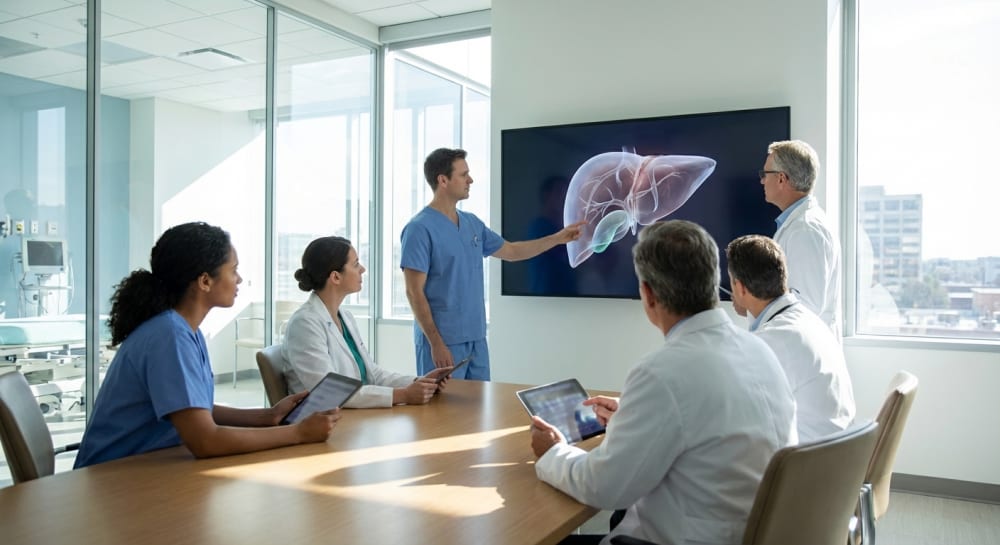
Dr. Romero advises patients to seek treatment at hospitals that utilize a “Liver Tumor Board.” This body ensures that care is coordinated among a diverse group of experts, including medical oncologists, surgeons, radiologists, hepatologists, and pathologists.
“Until 2018 there was basically only one type of chemotherapy, but since then there have been a number of major breakthroughs that have increased the survival rate.” — Dr. Carlos Romero-Marrero, Cleveland Clinic Martin Health
Residents of Vero Beach and the wider Treasure Coast region can access Dr. Romero’s expertise at his office in Tradition HealthPark Two, located at 10080 SW Innovation Way in Port St. Lucie. For appointments or more information regarding liver health services, residents may call 877-463-2010.