

In a remarkable display of ecological stewardship and inter-agency cooperation, local environmental groups and state agencies have united to rescue a severely eroded section of Sebastian Inlet State Park. Known as the Coconut Point Shoreline Resilience Project, this initiative is transforming a vulnerable stretch of the Indian River Lagoon into a thriving living shoreline, offering an inspiring blueprint for coastal restoration across the Treasure Coast.
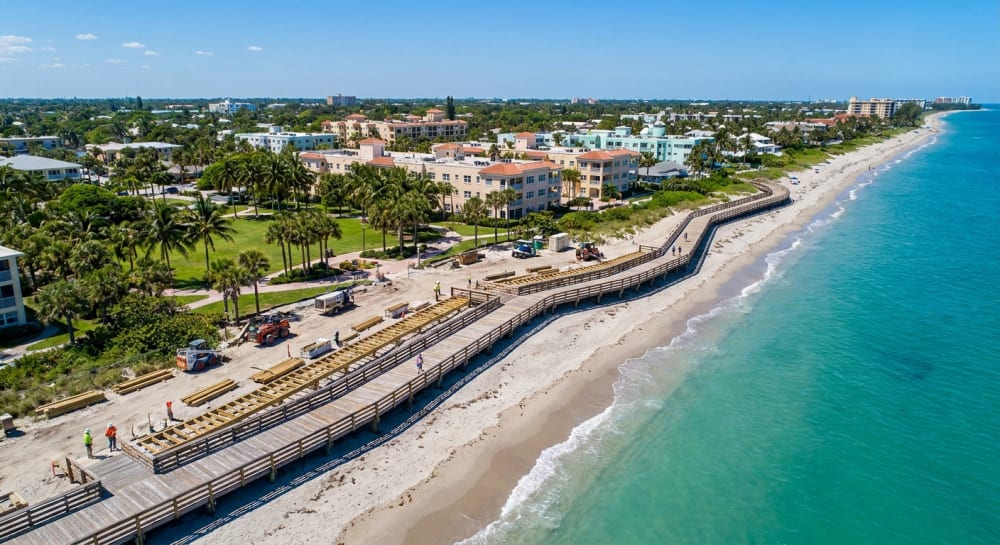
Coconut Point, a narrow finger of land jutting into the lagoon on the southern side of the state park, suffered significant damage when Hurricane Nicole battered the Florida coast in November 2022. The powerful storm—the very same weather event responsible for destroying the Humiston Park boardwalk in Vero Beach’s Central Beach—tore away crucial landmass. The damage at Coconut Point was further exacerbated by a nearby boat ramp, which naturally magnifies the destructive energy of incoming wave action.
To combat this ongoing erosion and reclaim the lost sand, a highly structural yet entirely ecological solution has been put into place. Along a 200-foot stretch of shoreline positioned just west of the park’s campgrounds, crews have installed a staggered line of 22 honeycomb-patterned concrete reef arches. Each of these massive arches measures 4 feet wide, stands 2.5 feet tall, and weighs an impressive 1,200 pounds.
James Gray, the executive director of the Sebastian Inlet District, highlighted that this endeavor perfectly illustrates how partnering agencies can successfully collaborate to enhance coastal resiliency along Florida’s public shores.
The concrete arches are just the foundation of this restoration effort. Over the next three to six months, project coordinators will transition into the ecological phase: planting approximately 90 mangrove trees between the newly laid arches and the mainland. This combination of artificial breakwater and natural flora is what environmental scientists call a living shoreline.
The immediate and long-term benefits of this living shoreline directly support the health of the local Indian River Lagoon ecosystem:
- Erosion Control: The concrete reef arches act as an immediate breakwater, significantly reducing the energy of incoming waves before they hit the vulnerable shore.
- Habitat Creation: The intricate, submerged root systems of the upcoming mangroves will provide a heavily sheltered nursery for small fish, crustaceans, and other marine life.
- Shoreline Accretion: The natural vegetation is expected to trap sand and sediment over time, slowly rebuilding the landmass that was washed away.
Vero Beach’s own Ocean Research and Conservation Association (ORCA) is spearheading the project’s scientific oversight. Utilizing their rigorous monitoring approaches alongside the help of dedicated volunteer citizen scientists, ORCA will closely track the site’s progress over the next three years. Natalie Stephens, a research associate managing coastal restoration projects for ORCA, notes that reef arches have been deployed with great success in other Florida coastal municipalities, including Cape Canaveral, Titusville, and Palm Bay.
According to Stephens, the ultimate vision is that the concrete structures will eventually disappear from view, completely overtaken by natural mangrove recruitment and native shoreline vegetation. Furthermore, the porous arches will attract vital marine invertebrates, fundamentally changing the water chemistry for the better.
By attracting oysters and other invertebrates, the structure will improve the local water quality. A single adult oyster can filter up to 50 gallons of lagoon water per day, contributing immensely to a healthier aquatic environment.
Despite its massive environmental impact, the project carries a relatively modest price tag of $190,004, made possible through a diverse network of community partnerships, environmentally conscious businesses, and state funds. The Florida Department of Environmental Protection and the Sebastian Inlet District are key contributors. Private industry stepped up significantly as well; Boynton Beach-based Reef Arches manufactured and donated $81,000 worth of materials and labor to the cause. Furthermore, MANG, a West Palm Beach environmentally themed apparel company, is donating half of the required mangrove plants through their initiative that funds shoreline restorations.
The ongoing management and three-year scientific monitoring by ORCA is being financially supported by 11th Hour Racing, a Rhode Island-based nonprofit foundation dedicated to mobilizing maritime industries to protect ocean health. Together, these organizations are proving that with strategic action and collaborative investment, the Treasure Coast can effectively turn the tide on erosion and build resilient habitats for generations to come.