

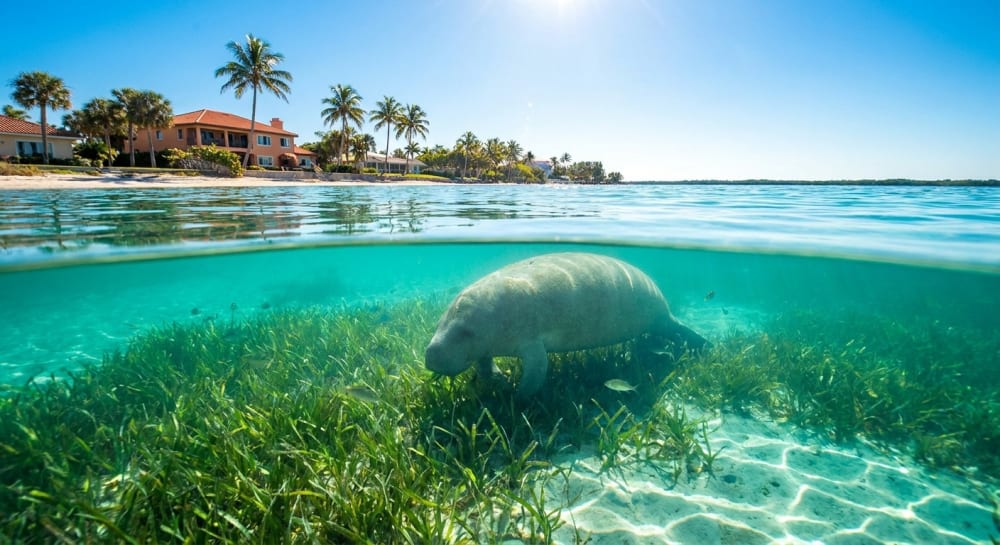
The beloved Indian River Lagoon is experiencing a remarkable ecological resurgence, bringing a wave of optimism to residents of Indian River County and the wider Treasure Coast. According to new data released by the St. Johns River Water Management District, vital seagrass beds—the foundational pillar of the lagoon’s ecosystem—are making a massive, measurable comeback.
For the local community, the lagoon is far more than just a scenic backdrop; it is a driving force behind property values, recreational boating, and the regional economy. The return of seagrass is a crucial victory following the devastating algae blooms from a decade ago that wiped out nearly 60 percent of these underwater meadows. That environmental collapse led to catastrophic fish kills, sickened bottlenose dolphins, and caused the tragic loss of hundreds of manatees.
Through determined, multi-agency clean-water initiatives aimed at reducing the nitrogen and phosphorous runoff that feeds deadly algae blooms, the environmental tide is finally turning. Across the entire Indian River Lagoon, seagrass beds have more than doubled in size since 2023. Local improvements are especially pronounced, with the following documented milestones:
- Indian River County Growth: A 27 percent increase in seagrass coverage within the county’s specific portion of the lagoon.
- Southern Central Expansion: The Southern Central Indian River Lagoon, stretching from the Melbourne Causeway in Brevard County south to the Fort Pierce Inlet, witnessed a staggering jump from 24,500 acres in 2023 to 42,100 acres in 2025.
- Massive Scale: The recent 72 percent increase in the Southern Central sector is roughly equivalent to the size of 13,000 football fields.
The ecological benefits of this revitalization are deeply significant. Seagrass provides essential habitat, stabilizes sediment, and acts as a natural water filter. The Smithsonian Marine Station at Fort Pierce emphasizes just how vital this plant life is, noting that a single acre of seagrass can support up to 40,000 individual fish and 50 million small invertebrates.
“The increase we are seeing across much of the lagoon is an encouraging sign that environmental conditions in some areas may be improving and supporting natural seagrass recovery,” said Dr. Loraé Simpson, supervising environmental scientist with the St. Johns River Water Management District. “While these gains are promising, seagrass coverage remains below 2009 levels, reinforcing the importance of continued restoration efforts, long-term water quality improvements and ongoing monitoring.”
This localized progress offers a welcome relief after years of devastating losses. In 2016, an unprecedented brown tide smothered meadows in Brevard County, heavily impacting the northern lagoon’s biodiversity. The crisis peaked again in 2021 when a severe lack of underwater forage led to the starvation of over 1,100 manatees across Florida’s coastal waters, including 42 reported deaths in Indian River County and 359 in neighboring Brevard. Thankfully, mortality rates have steadily decreased as water quality and food sources improve.
“I’m hoping that this trend that I see is going to continue,” stated Patrick Rose, an aquatic biologist and executive director of the Save the Manatee Club. “We just don’t want people to feel like, ‘OK, now it’s done.’ There’s much more work to do. We have to get back to making sure that growth is done sustainably. What’s good for the manatees is good for the entire aquatic ecosystem.”
While the road to a full recovery is long, the dedicated efforts of local municipalities, environmental groups, and state agencies are proving that the Indian River Lagoon can be saved. For Vero Beach and Indian River County residents, this rebounding ecosystem signals a healthier, more vibrant future for both marine life and the coastal community that cherishes it.