

The debate over municipal expansion and land development continues to be a focal point for residents in Indian River County. In Sebastian, local advocates and city leaders are pushing back against criticism regarding city annexation efforts, arguing that absorbing new properties into the city limits is the most effective way to preserve the area’s small-town character and enforce strict local building codes.
The core of the local annexation strategy rests on the premise that regional development is inevitable, but by bringing adjacent lands into the City of Sebastian, local officials can enforce stricter building codes and lower height limits compared to broader Indian River County regulations.
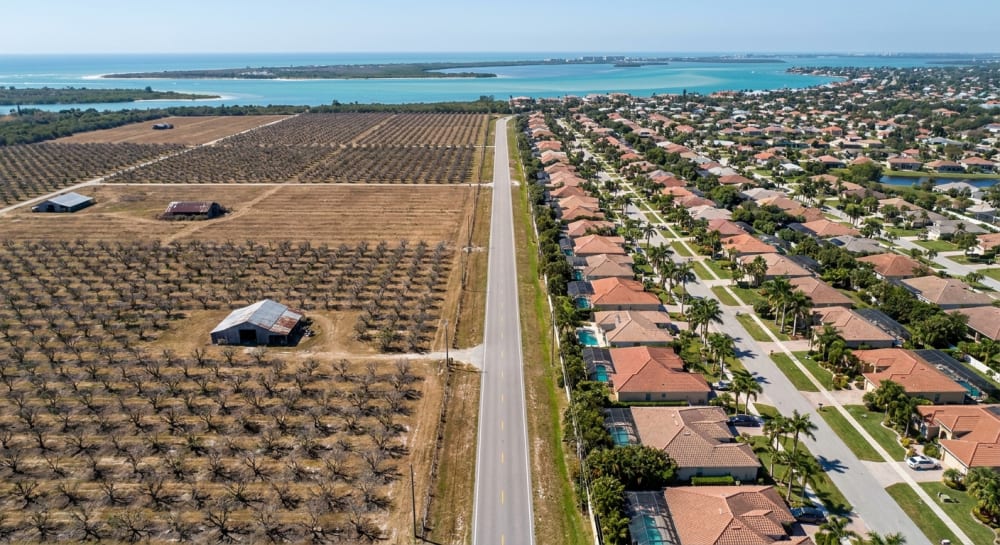
Much of the land currently under discussion for annexation consists of former agricultural properties and defunct citrus groves, including tracts previously utilized by local fruit companies. Proponents of the annexation note that with Florida’s rapid population growth, these parcels will be developed regardless of municipal boundaries. By annexing the land, Sebastian can apply its stringent development restrictions rather than leaving the properties subject to looser county standards.
The current Sebastian City Council—consisting of Mayor Fred Jones and Council members Chris Nunn, Ed Dodd, Bob McPartlan, and Sherrie Matthews—has emphasized long-term sustainability for the community. The push for annexation is viewed as a strategic move to prevent Sebastian from being boxed in by surrounding county development, a situation that has previously impacted neighboring municipalities like Vero Beach. A critical City Council meeting to address these ongoing growth and annexation issues is scheduled for Wednesday, May 13, 2026, at City Hall.
A significant part of the community dialogue also revolves around protecting the Indian River Lagoon amidst this regional growth. The City of Sebastian has initiated several proactive environmental measures to counterbalance development impacts, including:
- Transitioning lagoon-adjacent residential properties from aging septic systems to county sewer services.
- Collaborating with local aquaculture experts, such as Nicolette Mariano, an Aquaculture Biologist operating Treasure Coast Shellfish, whose oyster farming naturally filters lagoon water.
- Organizing volunteer initiatives, including recent Project SeaSafe events, to plant acres of seagrass and millions of clams. Fact: A single mature clam can filter between 20 and 25 gallons of water per day.
Supporters of the municipal expansion emphasize that without annexation, property owners would pay county taxes while future residents would continue to utilize Sebastian’s parks, boat ramps, and civic amenities without contributing directly to their maintenance. Furthermore, by taking control of the land development, Sebastian aims to avoid mirroring the rapid, densely packed expansions seen in nearby areas like Palm Bay and Port St. Lucie.
Ultimately, the city’s strategy centers on utilizing strict local codes to guide incoming growth on its own terms, securing both its economic stability and environmental future for generations to come.