

A long-standing practice by the City of Vero Beach to channel millions of dollars in water and sewer utility revenue into its general fund is facing renewed scrutiny. The financial strategy, historically used to keep city property tax rates low, has sparked contentious debates at both Vero Beach City Hall and the Indian River Shores Town Hall.
Vero Beach Mayor Cotugno recently initiated discussions to increase the percentage of revenue the city extracts from its water and sewer utilities. Currently set at 6 percent, the mayor is advocating to raise the transfer rate to 8 percent, or even the legal maximum of 10 percent. The city justifies this by arguing that as the owner of these enterprise funds—which also include the marina, solid waste, and the airport—Vero Beach assumes the operational risks, and its shareholders therefore deserve compensation. To ease the council into the concept, City Manager Monte Falls directed them to review other enterprise funds first, resulting in successful preliminary moves to increase transfers from the marina and solid waste departments.
However, this push for higher utility transfers comes at a challenging time for local ratepayers. Councilwoman Linda Moore strongly pushed back against the proposal, pointing to significant, impending cost increases for residents.
- Water and sewer rates for a typical residential customer are slated to increase by nearly 47 percent between now and the year 2030.
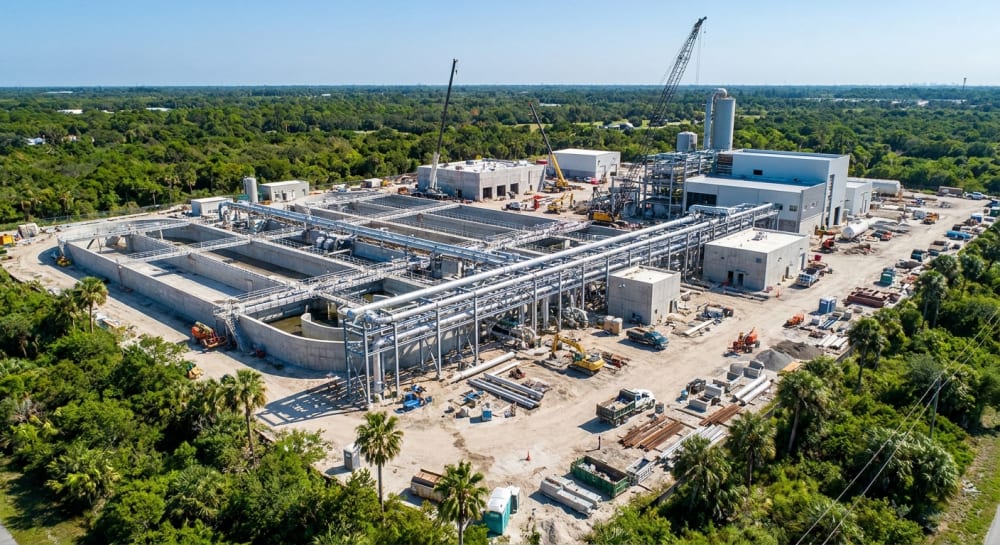
- These massive rate hikes are primarily required to fund a new $164 million state-of-the-art water treatment plant currently under construction near the airport, as well as rising operational costs.
- The city council is scheduled to formally vote on these initial rate increases in August, ahead of finalizing the budget in September.
Despite the looming 47 percent rate increase, Mayor Cotugno characterized the proposed general fund transfer hike as amounting to just pennies on customers’ bills, expressing visible frustration with the pushback from his peers.
“Now you sound like the people from The Shores. Oh, God forbid the water rates are going up. Well, we’re building a $164-million, state-of-the-art water treatment plant.”
The mayor’s pointed reference to Indian River Shores highlights a deep geographic and political divide regarding regional utility management. During a July 23 meeting of the Indian River Shores Town Council, Vice Mayor Bob Auwaerter revealed that Shores residents are effectively already paying roughly 12 percent of their utility bills directly into Vero’s general fund—double the publicly touted 6 percent rate.
According to Auwaerter, a retired bond portfolio manager and credit analyst, the financial diversion happens in two distinct parts. First, there is a nearly $1.8 million “profit contribution” transferred outright from the water and sewer fund to the city’s general fund. Second, the city levies an additional $1.8 million general fund administrative chargeback against the utility to cover general City Hall operations. Auwaerter, drawing on his experience with the city Utilities Commission, noted that these administrative charges appear somewhat arbitrary and lack systematic analysis.
“There are two transfers that occur out of the water and sewer fund, which is paid for by all of us in this room who get water and flush their toilets… That’s taxation without representation.”
Auwaerter’s budgetary analysis found that utility ratepayers currently fund a staggering 10.2 percent of Vero Beach’s total operating budget. The core of the political controversy lies in the demographics of that customer base: approximately 40 percent of Vero utility ratepayers reside outside the city limits, living either in Indian River Shores or unincorporated areas of the barrier island. These non-resident customers are mandated to help bankroll city operations through their monthly utility bills, but they lack the voting rights to elect the five-member Vero Beach City Council that dictates those very rates and transfer amounts.
With potential property tax reductions appearing on the upcoming November ballot, the financial debate over how much cash the city should skim from the water and sewer utility is widely expected to intensify.